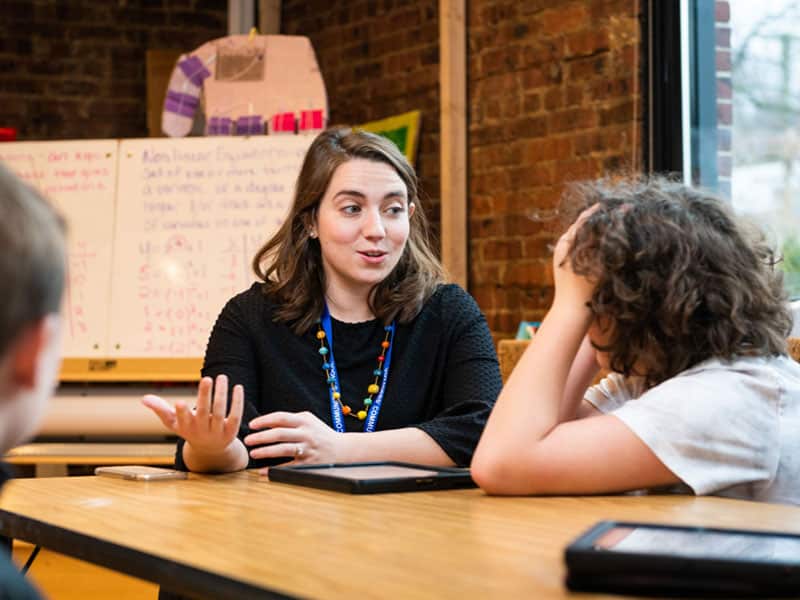
In traditional Reggio Emilia schools, teachers are viewed as co-learners and teacher-researchers. At Voyagers’, our teachers fully embody this role. In our everyday lives, learning does not happen by waiting for someone to tell us what to think or how to learn. Instead, curiosity leads the way. When people are interested in something, they ask questions, research, experiment, and figure out how to apply their learning in meaningful ways. This same process guides teaching and learning at Voyagers’.
Rather than relying on lectures, Voyagers’ teachers carefully observe students’ interests, ask open-ended questions to deepen their thinking, and research alongside them. Teachers also thoughtfully plan project-based experiences that encourage deeper exploration, problem-solving, and critical thinking.
A recent experience from our first trimester offers a clear example of what teacher-researcher work looks like in practice. After a heavy rain, students began playing with muddy water during recess. Over several days, they experimented with different ways to make the water cleaner. Teachers noticed that this interest persisted and began observing more closely.
Observation is the first step in the teacher-researcher cycle. Teachers paid attention to the materials students chose and the prior knowledge they brought to their play. For example, students used rocks to filter water because they “saw it in a water filter before,” demonstrating an early understanding of filtration.
After reflecting on these observations, teachers planned two intentional learning experiences to deepen understanding while honoring student agency. The first was a guided water filtration experiment. Teachers selected the materials, and students assembled the filters themselves, applying the scientific method to their own questions and discoveries.
The second experience invited even more creativity and independence. Students designed and built their own water filters using recycled and natural materials. Teachers participated as co-learners, as this was a first experience for everyone involved. Students sketched their designs, constructed their filters, tested them using stream water, and observed the results. They then discussed how their designs worked and what they might change to improve them. Throughout both experiences, teachers asked thoughtful questions to encourage reflection, critical thinking, and deeper inquiry.
The final step of the teacher-researcher cycle is reflection. This step is essential, as it allows teachers to continuously grow and refine their practice. Teachers reflected on what went well and what could be improved. In this case, they noted that more time for construction would have allowed students additional opportunities to revise and problem-solve during the building process. They also wondered, are the students done or are there curiosities that will drive them back to the original or new questions? We are always on the look out for learning opportunities.
The teacher-researcher approach at Voyagers’ is one of the ways our school supports meaningful, authentic learning. By valuing curiosity, agency, collaboration, and reflection, we nurture critical and creative thinkers—skills that are essential for independence, communication, and collaboration throughout life.