
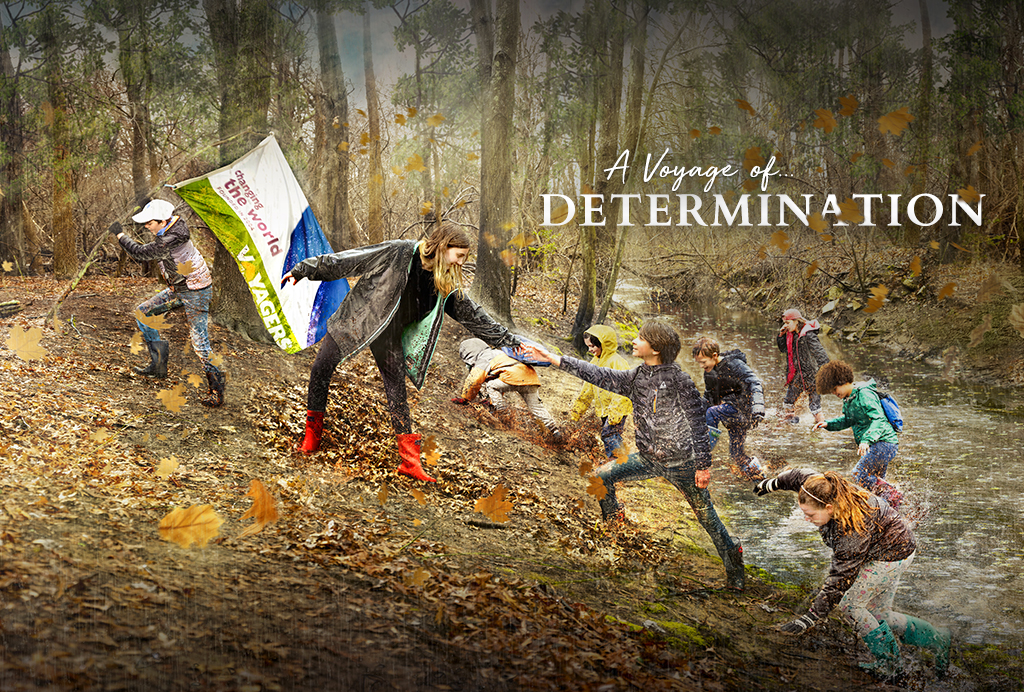
Outdoor School
Middle School, Grades 6–8
A progressive middle school experience in Monmouth County, NJ rooted in curiosity, challenge, relationships, outdoor exploration, interdisciplinary projects, and meaningful real-world learning.
Middle school should reconnect students to the real world.
What Makes Outdoor School Different?
Early adolescence is a time of enormous intellectual, emotional, physical, and social growth. Yet traditional middle school environments often ask students to sit still longer, disconnect learning from real life, and move further away from curiosity, movement, and meaningful work.
At Voyagers’ Outdoor School, we believe middle school students learn best when they are challenged intellectually, trusted with responsibility, connected to nature and community, and engaged in work that feels authentic and consequential.
Students explore forests, waterways, cities, museums, studios, businesses, and communities while also developing strong skills in writing, research, mathematics, scientific thinking, collaboration, discussion, reflection, and creative problem-solving. Learning is interdisciplinary, relationship-driven, and grounded in real-world experience.
Students may spend the morning conducting ecological observations outdoors, debating ethical questions during seminar discussions, collaborating on interdisciplinary projects, or reflecting through writing and journaling in nature.
Students may:
- investigate ecosystems and environmental systems
- engage in scientific fieldwork and ecological observation
- document thinking and discoveries in nature journals
- apply mathematical and scientific reasoning to real-world situations
- study how human relationships with nature, technology, and community have evolved throughout history
- collaborate on interdisciplinary projects connected to authentic questions and challenges
- explore technology, digital tools, media literacy, and emerging AI systems thoughtfully and ethically while learning when technology enhances human creativity, collaboration, research, communication, and problem-solving
Outdoor experiences help students build resilience, adaptability, observation skills, confidence, collaboration, and increasing self-awareness as they learn to navigate uncertainty, responsibility, challenge, and discovery in real-world environments.
The natural world offers complexity, beauty, perspective, unpredictability, and endless opportunities for inquiry. It invites students to think deeply, solve problems creatively, work collaboratively, and develop a stronger understanding of themselves, one another, and the world around them.
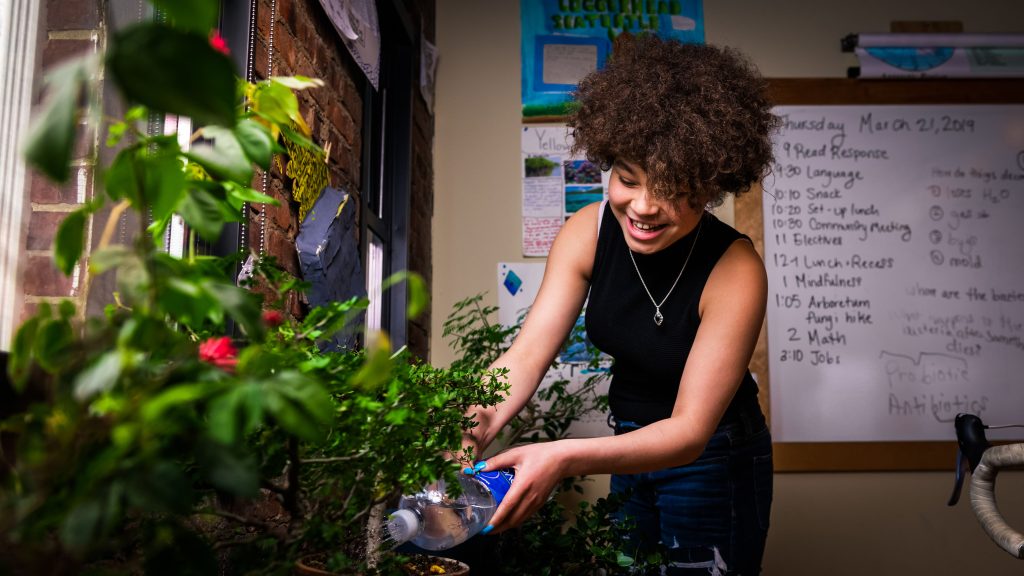
Designed for the Realities of Adolescence
Adolescents often move between growing confidence and lingering self-doubt, increasing independence and a continued need for reassurance, excitement about the future and uncertainty about where they belong.
Friendships become increasingly important. Questions deepen. Emotional lives become more complex. Some students become intensely motivated while others begin wrestling with anxiety, self-consciousness, uncertainty, or disconnection as they search for belonging, identity, and purpose.
At Voyagers’, adolescents are supported within a learning community that balances freedom with responsibility, independence with mentorship, intellectual challenge with emotional safety, and increasing self-direction with accountability to themselves and others.
Students are encouraged to take intellectual risks, advocate for themselves, contribute meaningfully to community life, navigate conflict thoughtfully, strengthen executive functioning, and gradually develop increasing ownership of their learning, relationships, and responsibilities.
Because adolescence is not simply preparation for adulthood.
It is an important stage of life deserving of care, challenge, guidance, belonging, and deep respect.
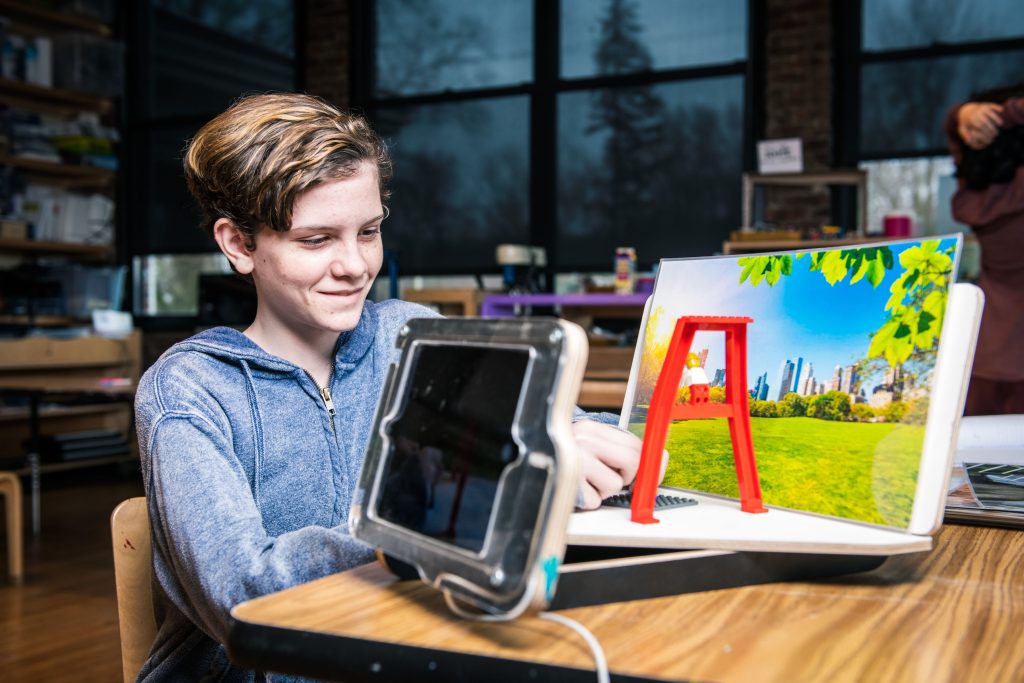
Intellectual Life & Meaningful Work
As students move through the Outdoor School years, learning becomes increasingly interdisciplinary, collaborative, reflective, and intellectually demanding as they engage more deeply with ideas, systems, research, communication, design, and real-world problem solving.
Students are encouraged to analyze ideas, defend perspectives, revise thinking, ask meaningful questions, connect disciplines, communicate clearly, and engage thoughtfully with increasing complexity and ambiguity.
Learning is active, inquiry-driven, and grounded in authentic experiences. Students may participate in seminar-style discussions, conduct scientific investigations outdoors, engage in interdisciplinary projects and research, contribute to community systems, reflect through journaling and portfolio work, and apply systems thinking to real-world challenges.
Over time, students develop increasing intellectual confidence, abstract reasoning, communication skills, organizational abilities, resilience, collaboration, leadership, and self-awareness as they engage more deeply with ideas, responsibilities, and one another.
Students are challenged not simply to complete assignments, but to think critically, engage deeply, pursue meaningful questions, and develop increasing independence, purpose, and intellectual confidence.
Curious About Outdoor School at Voyagers’?
We invite families to visit, ask questions, observe learning in action, and experience the Outdoor School community firsthand as they explore whether Voyagers’ is the right fit for their child and family.
Sometimes Families Wonder…
Will my child be known as an individual—not simply managed as part of a system?
Will there be enough depth, challenge, flexibility, and intellectual engagement?
Can middle school feel both serious and deeply human?
Will my child be supported in becoming more independent, capable, self-aware, and confident?
A visit is simply an opportunity to explore whether Voyagers’ Outdoor School feels like a place where your adolescent might grow in belonging, direction, intellectual depth, confidence, and purpose.
Experience Outdoor School at Voyagers’
The best way to understand Voyagers’ Outdoor School is to experience it firsthand. Visit the campus, observe learning in action, ask questions, and explore whether our community feels like the right fit for your adolescent and family.