Upper School
Grades 6–12
Adolescence is a profound period of intellectual, emotional, social, and personal transformation.
At Voyagers’, the Upper School years are designed to help students grow into increasingly thoughtful, capable, self-aware, and engaged young adults through meaningful work, authentic relationships, intellectual challenge, outdoor experience, reflection, and real responsibility.
Students are encouraged to think deeply, communicate clearly, collaborate meaningfully, navigate complexity, and gradually take increasing ownership of their learning and growth.
This is not education built around passive compliance or performance alone.
It is an education designed to help adolescents become more fully themselves.
The Outdoor School
Grades 6–8
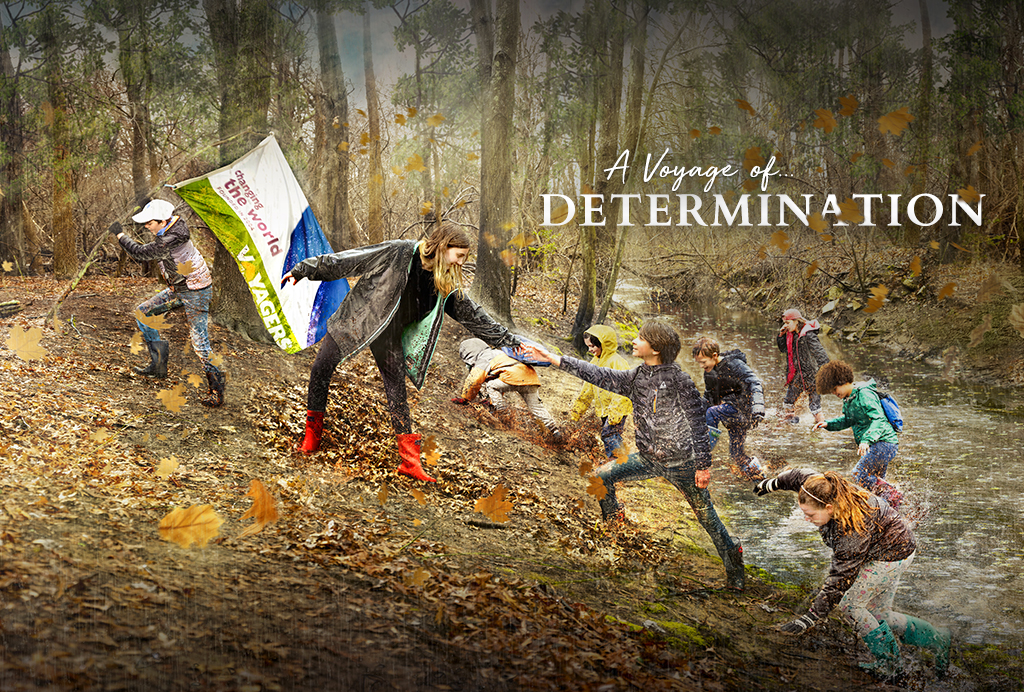
The outdoors serves not simply as a setting, but as an extension of the classroom itself.
By engaging directly with the natural world, students witness firsthand how environments, ecosystems, communities, and human systems are constantly changing and influencing one another.
Learning becomes active, embodied, and deeply connected to lived experience.
Students may spend the morning conducting ecological observations outdoors, debating ethical questions during seminar discussions, collaborating on interdisciplinary projects, or reflecting through writing and journaling in nature.
Students may:
- investigate ecosystems and environmental systems
- document observations in nature journals
- engage in scientific fieldwork
- apply mathematical and scientific reasoning to real-world situations
- explore how human relationships with nature have evolved throughout history
Outdoor experiences help students build resilience, observation skills, adaptability, confidence, collaboration, and increasing self-awareness as they learn to navigate uncertainty, challenge, responsibility, and discovery in real-world environments.
The natural world provides challenge, perspective, beauty, uncertainty, and endless opportunities for inquiry.
Growing Into Themselves
Adolescents often move between growing confidence and lingering self-doubt, increasing independence and a continued need for reassurance, excitement about the future and uncertainty about where they belong.
Friendships become increasingly important. Questions deepen. Emotional lives become more complex. Some students become highly driven while others begin experiencing anxiety, disconnection, or self-consciousness.
At Voyagers’, adolescents are supported within a learning community that balances freedom with responsibility, independence with mentorship, intellectual challenge with emotional safety, and increasing self-direction with accountability to themselves and others.
Students are encouraged to take intellectual risks, advocate for themselves, contribute meaningfully to community life, navigate conflict thoughtfully, strengthen executive functioning, and gradually develop increasing ownership of their learning, relationships, and responsibilities.
Because adolescence is not simply preparation for adulthood.
It is an important stage of life deserving of care, challenge, guidance, belonging, and deep respect.
Intellectual Life & Meaningful Work
As students move through the Outdoor School years, learning becomes increasingly interdisciplinary, collaborative, reflective, and intellectually demanding as they engage more deeply with ideas, systems, research, design, communication, and real-world problem solving.
Students are encouraged to analyze ideas, defend perspectives, revise thinking, ask meaningful questions, connect disciplines, communicate clearly, and engage thoughtfully with increasing complexity and ambiguity.
Learning is active, inquiry-driven, and grounded in real experiences.
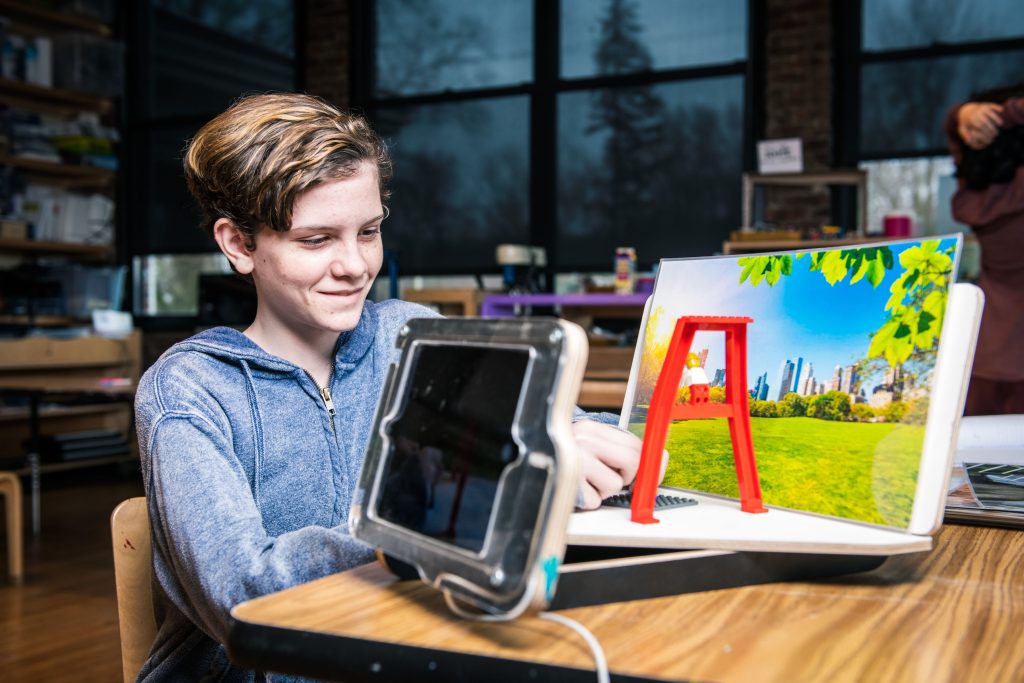
Students may participate in seminar-style discussions, conduct scientific investigations outdoors, engage in interdisciplinary projects and research, contribute to community systems, reflect through journaling and portfolio work, and apply systems thinking to real-world experiences and challenges.
Over time, students develop increasing intellectual confidence, abstract thinking, communication skills, organizational abilities, resilience, collaboration, leadership, and self-awareness as they engage more deeply with ideas, systems, and responsibilities.
Students are challenged not simply to complete assignments, but to think critically, engage deeply, pursue meaningful questions, and develop increasing independence, purpose, and intellectual confidence.
Curious About Upper School at Voyagers’?
We invite families to visit, ask questions, and experience the community firsthand.
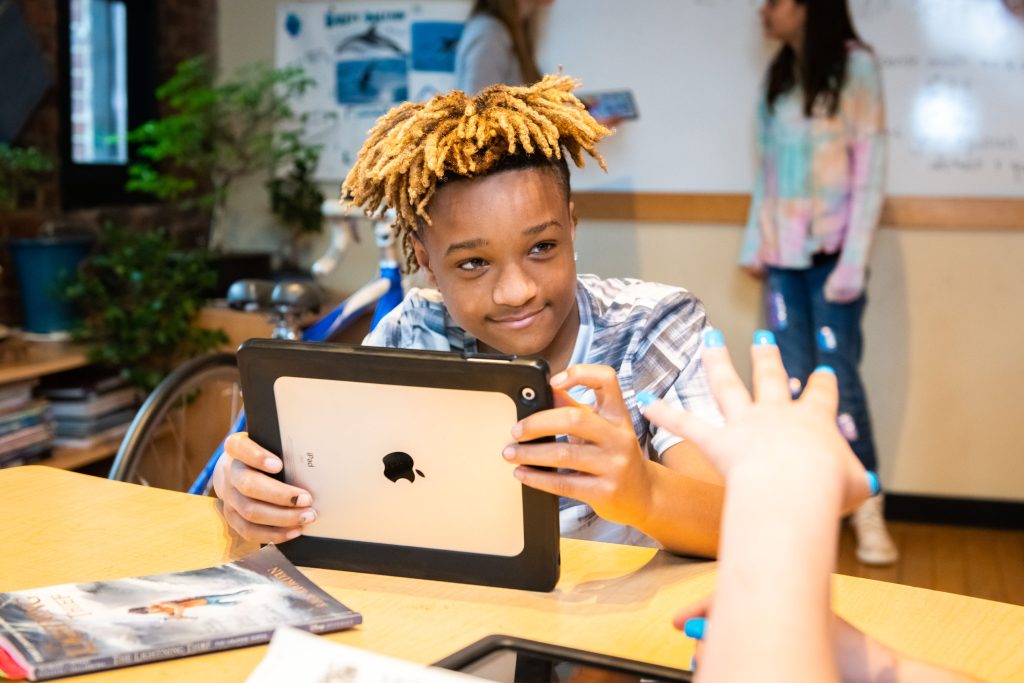
High School: Purpose, Depth & Direction
The high school years are a time of increasing independence, intellectual maturity, self-discovery, and preparation for life beyond school.
At Voyagers’, students are challenged to think deeply, communicate clearly, engage meaningfully with ideas and community, and gradually take increasing ownership of their learning, goals, responsibilities, and future pathways.
We believe questions matter as much as answers, and that meaningful education is built not simply on memorization or performance, but on thinking critically, solving problems, creating, collaborating, reflecting, and contributing to the world around us.
Meaningful Work & Intellectual Life
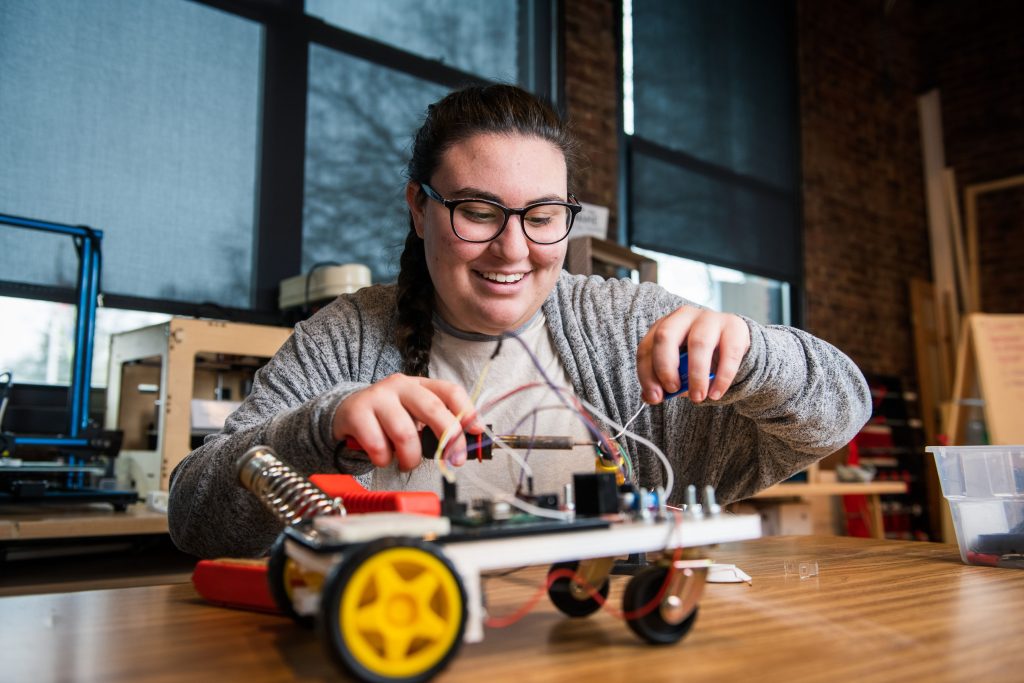
Students engage in seminars and collaborative discussions, internships and work-study experiences, independent studies and passion projects, leadership opportunities, dual enrollment college coursework, STEAM and creative exploration, portfolio development, presentations, and Senior Capstone projects that encourage increasing independence, depth, initiative, and intellectual confidence.
Students are encouraged to wrestle with complexity, consider multiple perspectives, analyze evidence thoughtfully, communicate effectively, and develop increasing confidence in their own thinking and capabilities.
College, Careers, & Individual Pathways
We recognize that meaningful adulthood does not follow one singular path.
Some students pursue highly selective colleges and universities. Others pursue entrepreneurship, creative careers, trades, work opportunities, travel, service, independent ventures, or alternative pathways that align more authentically with their strengths, interests, and goals.
At Voyagers’, students are supported in developing not only academic readiness, but also self-awareness, adaptability, initiative, resilience, and the ability to navigate an increasingly complex and rapidly changing world.
Since the first graduating class in 2011, Voyagers’ graduates have pursued a wide range of meaningful pathways, including four-year colleges and universities, entrepreneurial ventures, creative professions, skilled trades, and independent pursuits aligned with their strengths and aspirations.
100% of Voyagers’ seniors seeking four-year college admission have earned acceptance to colleges and universities.
Becoming Thoughtful Adults
We believe adolescents are capable of far more than passive participation in standardized systems.
When young adults are respected, challenged, mentored thoughtfully, and trusted with meaningful responsibility, they often rise to meet those expectations with surprising depth, creativity, insight, and purpose.
Our goal is not simply to prepare students for college.
It is to help them become thoughtful, capable, ethical, intellectually curious human beings prepared to contribute meaningfully to an ever-changing world.
Sometimes Families Wonder…
Will my child be known as an individual—not simply managed as part of the system?
Will there be enough depth, challenge, flexibility, and intellectual engagement?
Can high school feel both serious and human?
Will my child be supported in becoming more independent, capable, and self-aware?
A visit is simply an opportunity to explore whether Voyagers’ Upper School feels like a place where your adolescent might grow in confidence, direction, belonging, and intellectual depth.
Ready to Visit?
The best way to understand Voyagers’ is to experience it firsthand. Schedule a conversation, ask questions, and explore whether our community feels like the right place for your child and family.