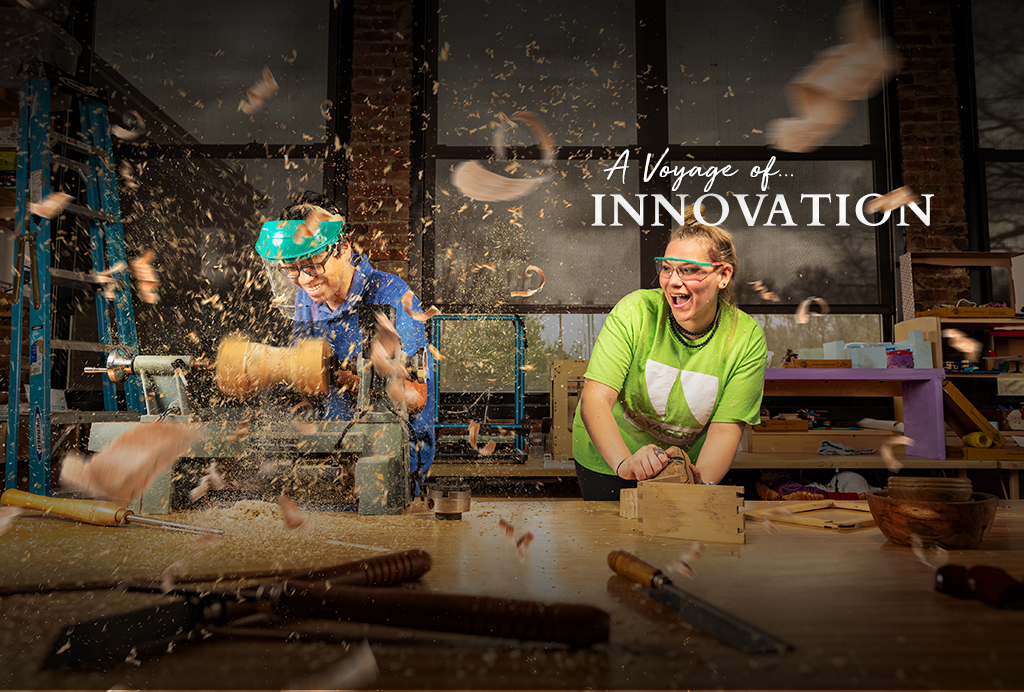
K–12 at Voyagers’ Community School
At Voyagers’ Community School, located in Lincroft, NJ, our K–12 program is designed for learners who thrive in a personalized, relationship-driven environment. We serve students who are curious, capable, and often underserved by traditional school models—children and teens who learn best through meaningful work, flexibility, and strong connections with adults and peers.
Learning at Voyagers’ is grounded in inquiry, real-world experiences, and deep engagement with ideas. Students are encouraged to think critically, collaborate thoughtfully, and take ownership of their learning. In our intentionally scaled learning environment, rather than sorting children into rigid tracks, we meet them where they are and support them as they grow academically, socially, and emotionally.
Our K–12 Approach
Across all age groups, students at Voyagers’ experience:
- Small class sizes and close relationships with teachers
- Personalized instruction tailored to individual strengths and needs
- Project-based and experiential learning
- Time for creativity, movement, and collaboration
- A supportive community that values belonging, voice, and agency
- Academic rigor balanced with flexibility and humanity
Students move through our program with continuity and care, building confidence, independence, and a strong sense of self.
Questions Families Often Ask Themselves
Families exploring Voyagers’ for older children often arrive after spending time noticing patterns that are hard to ignore.
- Why does school require so much effort but yield so little engagement?
- Is my child struggling—or simply mismatched with the environment?
- Why am I drawn to a project-based learning environment with meaningful time outdoors for my child?
- What if my child needs trust, flexibility, or depth rather than more pressure?
These questions are thoughtful. They reflect care, attention, and advocacy.
To explore how families come to recognize these signals—and what it can mean to respond thoughtfully—we invite you to read a reflection below.
What Learning Feels Like at Voyagers’ K–12
Learning at Voyagers’ is active, relational, and deeply engaging. Students spend their days working through real questions, collaborating with peers, and exploring ideas through projects that unfold over time.
Classrooms are conversation-rich and human-scaled. Teachers know their students well and adapt learning in response—guiding inquiry, offering challenge, and supporting growth rather than delivering one-size-fits-all instruction.
Students read, write, calculate, design, build, move, reflect, and revise their thinking. They are given time to explore ideas deeply, make mistakes, and develop confidence as thinkers and contributors within a supportive community.
Learning Beyond the Classroom
Across K–12, students participate in:
- Project-based and experiential learning
- Outdoor education and movement
- Collaborative group work and discussion
- Creative arts and hands-on exploration
- Opportunities for leadership and responsibility
Learning extends beyond textbooks and classrooms, preparing students to navigate the world thoughtfully and confidently.
Our Learning Pathways
Lower School
Grades K–5
Hands-on, project-based foundations
Outdoor School
Grades 6–8
Inquiry, independence, and learning beyond the classroom
High School
Grades 9–12
Purposeful learning and real-world readiness
Microschool
Grades K–12
Personalized learning with flexibility and care
Who Thrives in Voyagers’ K–12 Program
Voyagers’ K–12 program is designed for learners who benefit from a relational, project-based approach to education.
Students who tend to thrive here include those who:
- Are curious, creative, and thoughtful — even if they don’t always show it in traditional classrooms
- Learn best through hands-on work, discussion, and real-world projects
- Need flexibility in pacing, structure, or learning style
- Have felt constrained, misunderstood, or disengaged in conventional school settings
- Value relationships with educators who know them well
We intentionally keep our learning environment human-scale so students are known deeply and supported as whole people.
When This Program May Not Be the Right Fit
Voyagers’ K–12 program may not be the right fit for families who are seeking:
- A traditional school model with grades, rankings, and standardized pacing
- Large peer groups or conventional classroom structures
- Test-driven instruction or rigid curricular sequences
- A highly competitive or compliance-focused environment
We believe clarity serves everyone best and helps families make thoughtful, aligned choices.
Is Voyagers’ Right for Your Child?
K–12 Learning Communities
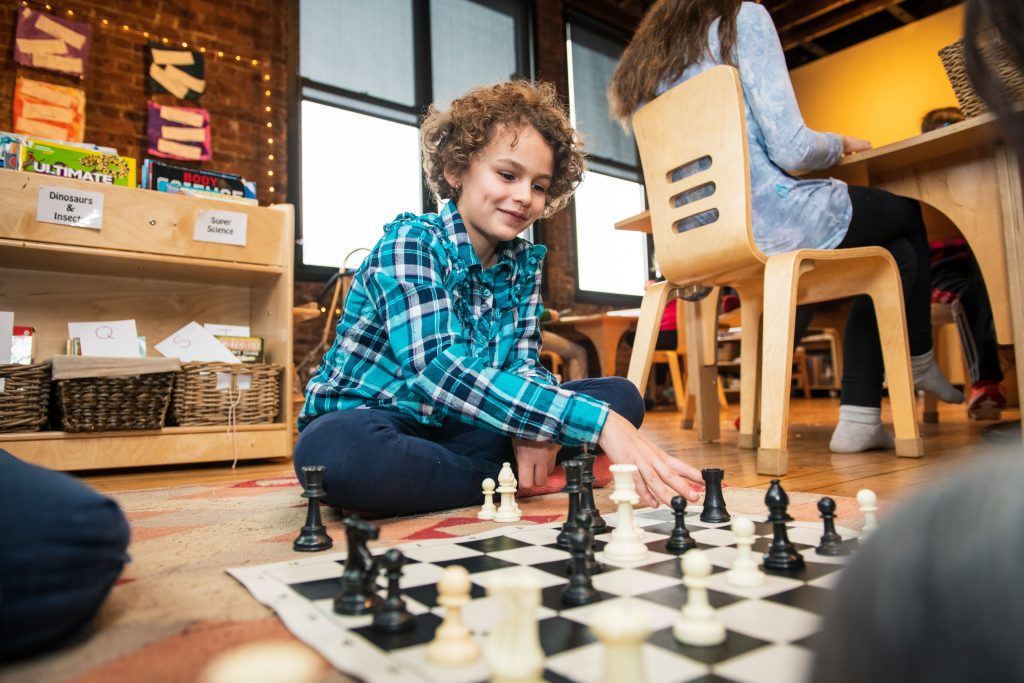
Lower School: K-5
Artists, Builders, and Emerging Academics
Lower School students at Voyagers’ are curious makers, thinkers, and problem-solvers. They learn best by doing—building, designing, questioning, and collaborating as they engage deeply with ideas and materials.
Children at this age are navigating a meaningful transition: growing independence alongside a continued need for care, belonging, and reassurance. Our environment honors both. Students are encouraged to take intellectual risks, develop confidence, and build strong relationships with peers and teachers who know them well.
What Learning Looks Like in Lower School
Learning is hands-on, collaborative, and grounded in real experiences. Students explore reading, writing, mathematics, science, and social studies through projects that integrate multiple disciplines and reflect their interests.
Teachers design learning experiences that invite curiosity while providing structure and challenge. Students plan their work, test ideas, revise thinking, and communicate their learning through discussion, writing, design, and presentation.
Daily routines emphasize responsibility, reflection, and participation in community life—helping students grow as capable learners and thoughtful contributors.
A Safe, Connected Learning Community
Lower School students thrive in an environment where relationships come first. Through small-group work, classroom responsibilities, shared decision-making, and leadership opportunities, children learn how to collaborate, resolve conflicts, and support one another.
Students may participate in:
- daily planning meetings
- classroom and community jobs
- collaborative projects and discussions
- leadership roles that build organizational and systems thinking
As children grow in confidence, they learn to balance independence with empathy, developing resilience and a strong sense of self.
Academics with Purpose
Academic learning is rigorous, responsive, and deeply connected to real-world application.
- Literacy focuses on deep comprehension, discussion, and expressive writing across genres.
- Mathematics emphasizes problem-solving, patterns, logic, and practical application—often connected to real-life contexts like running the school store.
- Science and Global Studies encourage observation, experimentation, critical thinking, and an expanding understanding of the world and our place within it.
Specialty teachers and classroom educators enrich learning through:
Art, Music, Dramatic Play, Computer Science, Technology, Physical Education, Sign Language, and hands-on STEAM exploration.
Throughout these years, teachers serve as attentive guides—listening closely, offering challenge and reassurance, and supporting the emergence of confident, capable learners.
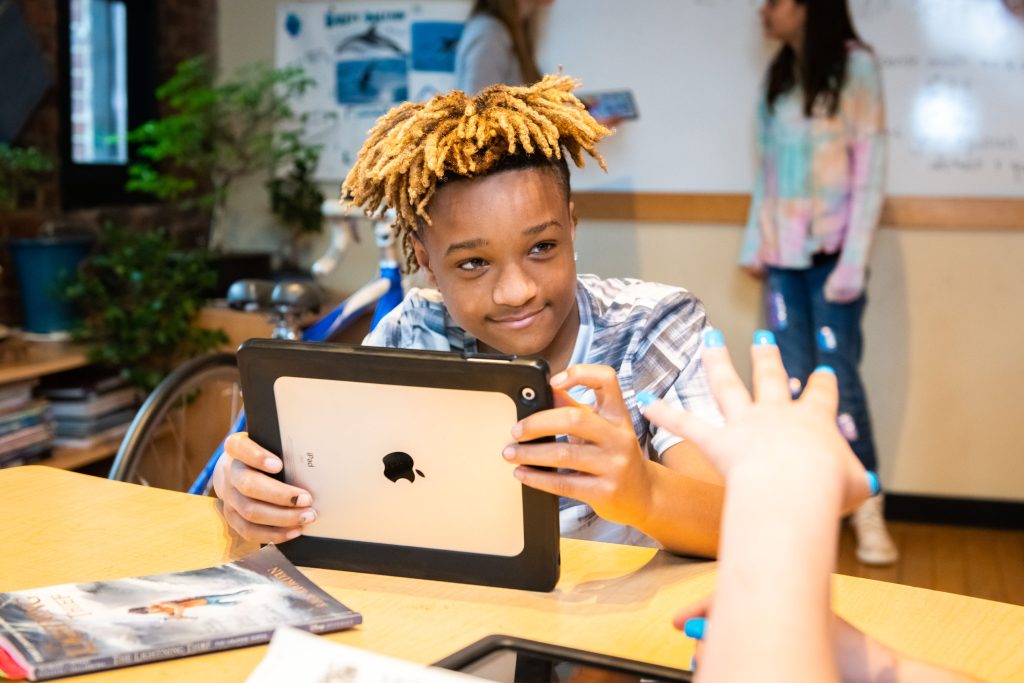
Middle School: 6–8
Outdoor School, Inquiry, and Emerging Independence
Middle school at Voyagers’ is a time of profound growth—intellectually, socially, and personally. Our Outdoor School is a defining element of this stage, offering students meaningful opportunities to deepen their thinking, build independence, and understand their place in the world through direct experience.
Students at this age are developing a stronger sense of identity while still needing connection, guidance, and reassurance. We intentionally design learning experiences that honor this balance—supporting confidence, curiosity, and responsibility within a safe, relationship-rich community.
What Learning Looks Like in Middle School
Learning is inquiry-driven, experiential, and increasingly interdisciplinary. Students explore complex ideas through projects that connect science, humanities, mathematics, and the arts—often grounded in real-world questions and outdoor investigation.
Teachers challenge students to form opinions, test ideas, analyze cause and effect, and communicate their thinking through discussion, writing, and presentation. Over time, students learn how to take intellectual risks, revise their thinking, and defend ideas with clarity and evidence.
Outdoor School: Learning in the Natural World
The natural environment plays an active role in Middle School learning. By working outdoors, students witness firsthand how ecosystems change, how humans impact the environment, and how scientific and historical concepts connect to the world around them.
Outdoor experiences deepen engagement, sharpen observation, and foster resilience. Students learn to collaborate, problem-solve, and reflect—developing both academic understanding and personal responsibility through hands-on exploration.
Growing Independence in a Supportive Community
Middle school students often feel both capable and uncertain—eager for independence while navigating social dynamics, self-doubt, and growing expectations. Our program provides the structure and support they need to grow with confidence.
Students participate in:
- Small-group work and collaborative projects
- Planning meetings and shared responsibilities
- Leadership roles within the school community
- Opportunities to practice organization, self-advocacy, and systems thinking
Strong relationships with teachers and peers help students develop empathy, resilience, and a sense of belonging as they take on greater responsibility.
Academics with Depth and Purpose
Academic learning becomes more complex and abstract during these years, with increasing emphasis on critical thinking and application.
- Literacy focuses on analysis, interpretation, research, and expressive writing across genres and media.
- Mathematics emphasizes problem-solving, reasoning, and connections between numerical concepts, including fractions, decimals, percentages, and algebraic thinking.
- Science and Global Studies are closely integrated, encouraging students to investigate natural systems, historical patterns, and human impact through experimentation, research, and field experiences.
Specialty and classroom teachers further enrich learning through:
Art, Music, Computer Science, Technology, Physical Education, Sign Language, and hands-on STEAM exploration.
By the end of Middle School, students leave Voyagers’ with confidence in their ability to think critically, pursue curiosity, and engage meaningfully with complex ideas—prepared to step into high school as capable, self-aware learners.
High School: 9–12
Purposeful Learning, Agency, and Real-World Readiness
Voyagers’ high school is designed for students who want a more intentional, flexible, and meaningful approach to learning. Rather than relying on outdated models built for another era, we offer a program that reflects the realities of today’s world—and the capabilities of today’s adolescents.
We believe questions matter as much as answers. High school students at Voyagers’ are trusted as thinkers, problem-solvers, and contributors, with increasing freedom and responsibility as they grow.
What Learning Looks Like in High School
Learning is rigorous, interdisciplinary, and driven by purpose. Students engage deeply with ideas through discussion, research, project work, and real-world application rather than surface-level coverage.
Teachers serve as mentors and guides—challenging students intellectually while supporting their growth as independent learners. Students learn how to manage time, set goals, collaborate effectively, and reflect on their work as they take greater ownership of their education.
Academic Depth with Flexibility
We teach traditional academic disciplines in non-traditional, integrated ways. Coursework emphasizes critical thinking, analysis, communication, and synthesis across subjects rather than rote memorization.
Students may engage in:
- Humanities, Mathematics, and Lab Sciences
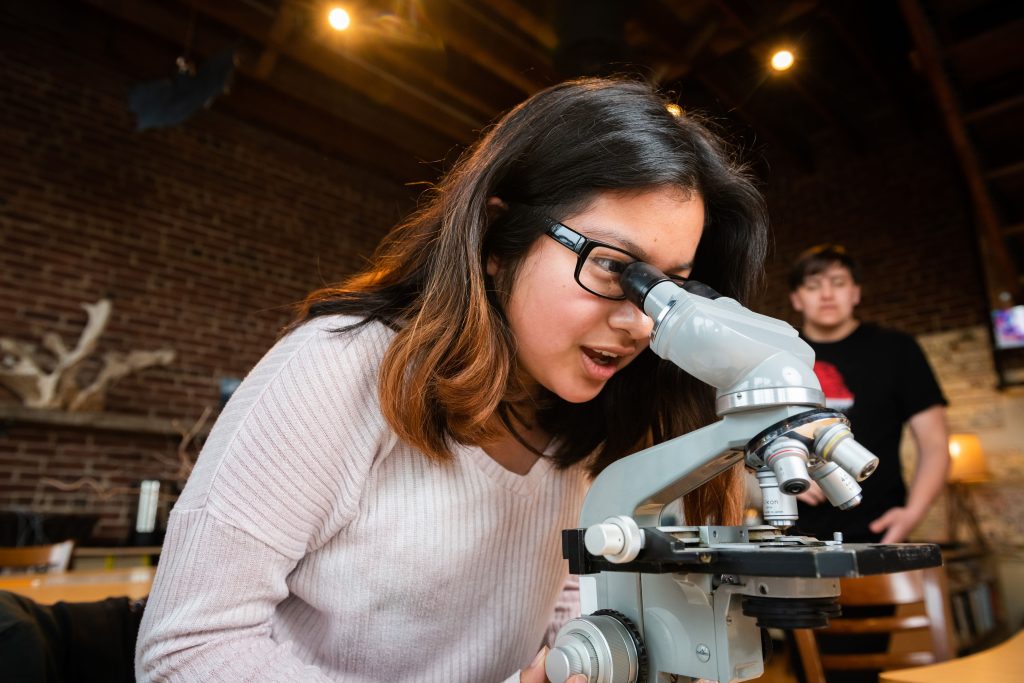
- STEM/STEAM and creative inquiry
- World Languages and interdisciplinary electives
- Independent study and guided research
- Internships, work/study opportunities, and early college coursework
- A culminating Senior Capstone experience
As expectations increase, so does accountability. Students learn to meet challenges, revise work, and develop expertise—skills essential for college, career, and life beyond school.
College Counseling & Life Beyond Voyagers’
College and post-secondary planning at Voyagers’ begins in early in high school and unfolds over time through a dedicated advisor partnership that supports students and families through graduation and beyond.
At Voyagers’ Community School, college and post-secondary planning is not a last-minute process—it is a thoughtful, long-term partnership that begins early and evolves with each student.
Students and families are introduced to a dedicated College Counseling & Post-Graduate advisor who remains with them through graduation and beyond. This continuity allows the advisor to know each student deeply—their interests, strengths, challenges, passions, and goals—and to guide them through application process. The advisor also supports families through decisions with clarity and confidence.
A Personalized, Collaborative Process
We believe post-high school planning is, at its core, a collaborative process. Advisors work closely with students and families to explore a wide range of pathways, helping each learner identify options that align with who they are and who they are becoming.
College counseling at Voyagers’ supports students pursuing:
- four-year colleges and universities
- early college and dual-enrollment programs
- trade schools and technical pathways
- creative, entrepreneurial, or alternative post-secondary routes
Our role is not to direct students toward a single definition of success, but to provide comprehensive information, thoughtful guidance, and steady mentorship so families can make well-informed decisions together.
Advising That Grows With the Student
In the early years of high school, advisors support students in:
- exploring extracurricular activities and leadership opportunities
- identifying areas of interest for deeper study
- planning meaningful summers through internships, travel, work, or reflection
- building a strong academic foundation
As students progress through high school, counseling becomes increasingly focused and individualized. Support expands to include:
- college research and list development
- preparation for standardized testing when appropriate
- workshops for students and families on the college process
- guidance on campus visits and interviews
- application strategy, writing support, and decision-making
Throughout the process, students are encouraged to take increasing ownership of their plans and their futures.
Outcomes That Reflect Preparation, Not Pressure
Voyagers’ graduates are prepared not only for acceptance, but for success beyond high school.
- 100% of Voyagers’ graduates earn acceptances to four-year colleges and universities.
- 98% of graduates matriculate, earning honors and recognition along the way.
Our alumni go on to:
- attend respected colleges and universities
- enter trades and technical fields
- launch businesses and creative ventures
- work in Fortune 500 companies and leading tech firms
- travel, study abroad, and pursue non-traditional paths aligned with their values
More importantly, they leave Voyagers’ with confidence, curiosity, and a strong sense of purpose—equipped to navigate an ever-changing world with integrity and adaptability.
Preparing Students for Life, Not Just What’s Next
Through years of mentorship, reflection, and challenge, students develop skills that extend far beyond applications and resumes: critical thinking, self-awareness, leadership, resilience, and empathy.
Voyagers’ alumni remain connected through shared experiences of discovery, determination, innovation, and growth. Together, they form a community of learners who continue to engage thoughtfully with the world and contribute meaningfully to it.
Learn More or Start a Conversation
Families interested in learning more about College Counseling and Post-Graduate Planning are invited to connect with our admissions team or schedule a conversation to explore whether Voyagers’ High School is the right fit.
Preparing Thoughtful, Capable Young Adults
Voyagers’ graduates leave with more than transcripts and acceptances. They leave as confident, curious young adults who know how to think critically, adapt to change, and engage with the world thoughtfully.
They understand how to evaluate information, consider multiple perspectives, and act with purpose and integrity. Most importantly, they trust themselves as learners—and as people capable of shaping their own futures.
Microschool
Personalized Learning with Freedom, Structure, and Care
Voyagers’ Microschool offers a highly personalized learning experience for students who benefit from greater flexibility, individualized pacing, and a smaller, more responsive environment. It is designed for learners whose strengths, curiosity, or learning styles may not fully emerge in traditional school settings—or through independent homeschooling alone.
In our Microschool, students learn in multi-age groups within a safe, relationship-rich community where they are known well, supported thoughtfully, and encouraged to take ownership of their learning.
Who the Microschool Is For
The Microschool is an excellent fit for students who:
- Need a flexible schedule or customized academic plan
- Thrive with individualized attention and small group learning
- Benefit from a blend of structure and autonomy
- Are curious, creative, or project-driven learners
- Are homeschooling families seeking community, mentorship, and resources
Being part of a learning community—where peers and adults notice effort, celebrate growth, and share learning—has a powerful impact on confidence, motivation, and joy.
What Learning Looks Like in the Microschool
Learning is student-centered, project-based, and responsive. Teachers serve as mentors and guides, designing learning experiences that align with each student’s interests, goals, and developmental needs while maintaining meaningful academic expectations.
Students engage in:
- Personalized instruction in literacy, math, science, and STEAM
- Project-based learning rooted in passion and inquiry
- Outdoor exploration and nature-based learning
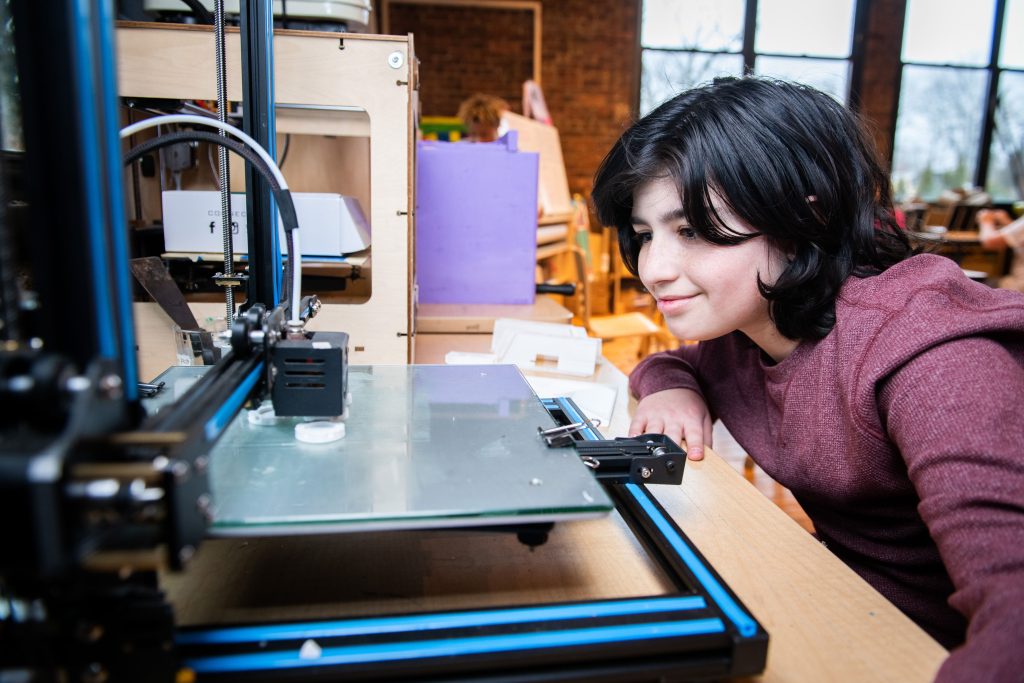
- Creative expression through art, design, writing, and making
- Life skills development, collaboration, and self-advocacy
Technology, hands-on materials, and community partnerships are thoughtfully integrated to support meaningful, real-world learning.
A Day in the Microschool
Each day follows a flexible rhythm designed to support focus, connection, and deep engagement.
Connections
Students ease into the day by building relationships, grounding themselves, and preparing for learning together.
Core Learning
Students work on core academic skills through individualized or small-group instruction. Learning may happen indoors, outdoors, or through project work, depending on age and focus.
Explore in Nature
Time is dedicated to movement, outdoor exploration, lunch, and connection with the natural world—supporting physical wellbeing and curiosity.
Dive into Projects
Students plan and bring ideas to life independently or collaboratively. Teachers coach, question, and encourage as students learn to persist, revise, and grow.
Reflection & Closing
The day ends with reflection—sharing wins, challenges, and goals—helping students build self-awareness and ownership of their learning.
Schedule, Tuition & Enrollment
The Microschool offers a flexible schedule, with most students attending 3–4 days per week between 8:30 am and 3:00 pm. Shorter days and before/after care options are available.
Tuition is variable and based on:
- Number of days per week
- Hours per day
- Length of enrollment
Rolling admission is available, with tuition prorated based on start date. Families are encouraged to discuss options during the admissions process to design a schedule that fits their needs.
Ready to Visit?
Choosing a school is a deeply personal decision. We invite families to visit, ask questions, and explore whether Voyagers’ feels like the right fit for their child.