
Nurturing Curious Eaters: A Holistic Approach from the Classroom and Beyond
As someone who has loved food, health, and children for as long as I can remember, combining teaching with holistic nutrition feels like a natural extension of who I am. I spent many years in the classroom before deepening my studies in alternative medicine, nutrition, and natural healing. Along the way, I worked in a health food store, studied herbs, essential oils, vitamins, and whole-food therapy, and strengthened a belief that continues to guide my work today: food is medicine.
Over the years, I’ve seen firsthand how children’s palates—and their attitudes toward food—can shift when families and schools work together. When food is approached with curiosity, playfulness, and respect rather than pressure, picky phases often soften. Drawing inspiration from holistic nutrition principles found in How Not to Die, Deeply Holistic, and The Whole Foods Diet, I’ve helped cultivate a classroom culture where nourishment and hydration are woven into daily learning.
At Voyagers’ Community School, this philosophy extends well beyond preschool. From infancy through 12th grade, children are supported in developing thoughtful, lifelong relationships with food—grounded in agency, awareness, and joy.
The Science Behind the Strategy
In How Not to Die, Dr. Michael Greger highlights how many leading causes of early mortality—such as heart disease, diabetes, and certain cancers—can be prevented or improved through diets rooted in whole, unprocessed plant foods. His “Daily Dozen” framework reinforces the importance of variety, color, and nutritional density.
Similarly, The Whole Foods Diet emphasizes eating foods close to their natural form while minimizing processed ingredients. These ideas align deeply with my teaching philosophy: exposure over coercion, variety over volume. Deeply Holistic invites educators and caregivers to view children’s health through multiple lenses—physical, emotional, sensory, and relational. In practice, this means pairing food exploration with stories, sensory play, conversation, and reflection.
With this foundation, food and hydration become part of the lived experience of learning—not an isolated lesson.
Transforming Picky Eating Through Play and Exposure
Food becomes curriculum
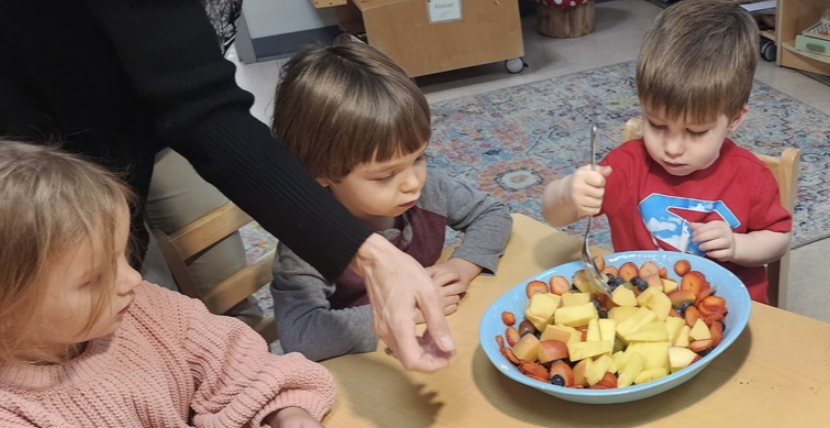
Rather than separating food from learning, we integrate it naturally into our day. Children sing songs about fruits and vegetables, shop and cook in dramatic play, and then connect that play to real cooking experiences. We make silly faces with fruit slices, build food landscapes, and invite children to dip fresh vegetables into homemade hummus. Over time, even hesitant eaters often begin to say, “I’ll try it.”
Harvesting, cooking, and tasting
Cooking with children creates powerful learning moments. Making homemade applesauce—peeling, chopping, cooking, and seasoning apples with cinnamon—turns an abstract ingredient into something meaningful. Reading Goldilocks and the Three Bears and preparing a nourishing porridge together blends literacy, comfort, and nutrition into a shared ritual.
Our school garden is another powerful teacher. Watching a tomato plant grow from seedling to vine, then harvesting and tasting the fruit, builds patience, respect for nature, and a deeper understanding of where food comes from.
Celebration, not coercion
We talk, not lecture. We ask questions like, “How does this feel? Crunchy? Sweet? Juicy?” Children are offered tiny “try-it” portions alongside familiar foods. Every attempt is met with gratitude. We never force. Respecting autonomy is central to holistic growth, and teachers model curiosity by eating alongside students and sharing what they notice.
The Power of Herbs and Spices
Herbs and spices offer an accessible and empowering entry point into cooking. Even very young children can sprinkle cinnamon, tear fresh herbs, stir turmeric, or compare scents. These small acts build confidence and ownership while enhancing flavor without relying on excess sugar or salt.
Herbs and spices also support digestion, immunity, and overall wellness. Introducing these flavors early helps children develop adventurous palates and positive associations with nourishing foods.
Hydration: A Foundational Piece of the Puzzle
Nutrition doesn’t end with food. Hydration plays a vital role in focus, digestion, mood, and energy. At school, water breaks are frequent and intentional—we joke that we’re always refilling our cups.
To make hydration inviting, we infuse water with fresh herbs, citrus, or berries, and occasionally serve warm mint tea. These simple touches help children view water as something special rather than an afterthought. We’ve also explored traditional drinks like switchel, opening conversations about history, wellness, and how people nourished themselves long before modern sports drinks.
Learning in Action: The Navigators’ Unit Study
The Navigators are currently engaged in a unit study focused on holistic nutrition and cooking. Students prepare simple, nourishing meals while learning how food supports the whole body. A special emphasis on eating “the colors of the rainbow” helps them understand balance, variety, and plant diversity.
Through cooking, tasting, and discussion, students connect nutrition knowledge with real-world life skills—reinforcing the idea that caring for our bodies is both empowering and enjoyable.
Tips for Families: A Holistic Home-School Partnership
Families can support this work at home by:
- Going on food adventures and letting children choose one new fruit or vegetable
- Cooking together using visually engaging, child-friendly cookbooks
- Exploring different textures and preparation styles
- Offering small try-it portions alongside familiar favorites
- Making hydration fun with infused water or mild herbal teas
- Celebrating curiosity and effort rather than outcomes
When families and schools align, children receive consistent messages that food is safe, enjoyable, and worthy of exploration.
Why This Matters—For Lifetimes
Early childhood is a powerful time to plant seeds for lifelong habits, but those seeds must be nurtured as children grow. When children regularly experience colorful, whole foods and playful hydration, they develop preferences for nourishment rather than convenience or excess sugar.
Holistic nutrition invites us to see children as whole beings—body, mind, emotions, relationships, and environment. By making mealtimes, cooking, gardening, and water breaks part of the curriculum, we are doing more than feeding bodies. We are cultivating curiosity, agency, respect, and lifelong well-being.